In my original article on JYB I noted that he and his second wife, Gladys, had a daughter, Jacqueline Elizabeth, who was born in 1940, a year before their marriage. I wondered whether she was born out–of–wedlock or whether she was a daughter of Gladys by a previous marriage or relationship, and adopted by JYB as his step–daughter. Either way she proved curiously elusive in online ancestry records. Fortunately she, by now Jacqueline Elisabeth Norman by marriage, made contact with me and revealed that she was indeed adopted in September 1941. Her birth mother (as named on her birth certificate) was Marjorie Evelyn Seaborn. “I was never told I was adopted,” she told me, “and I found out from Somerset House when I was about 20. I never told my parents I knew.” Her birth name was Susanne Seaborn, but on her adoption she was renamed Jacqueline Elisabeth, the Jacqueline, she thinks, coming from JYB’s familiar name Jack, and the Elisabeth (with an s, not a z) from her adoptive mother, Gladys, whose second name was Elisabeth.
As regards JYB’s religious beliefs, Jacqueline told me:
My father was liberal in his views on Race and Religion (with the exception of evangelical Christians !) He came from a Roman Catholic family, but was very interested in Eastern Religions – Buddhism, Hinduism (he had a copy of the Baghavad Gita), and the ancient Chinese classic, the I Ching. He also had an interest in Theosophy – I still have his copies of Krishnamurti’s ‘At the feet of the Master’ and books by Annie Besant.
As regards other interests:
His favourite authors were Richard Jefferies (The Story of My Heart), Robert Graves, John Cowper Powys and perhaps most of all, Ruskin. We have several of his books on our shelves. My father also loved ballet and opera. He did an oil painting of Giselle.
Though JYB grew up in a prosperous family (his father was a surgeon), Jacqueline’s life with an artist father was not so prosperous:
We were poor, always worried about money. We lived in rented houses in Leamington, Marlborough, Cranbrook and Little Common – no car, television, camera etc. He loved Marlborough, cycling in the beautiful countryside, walking and archery.
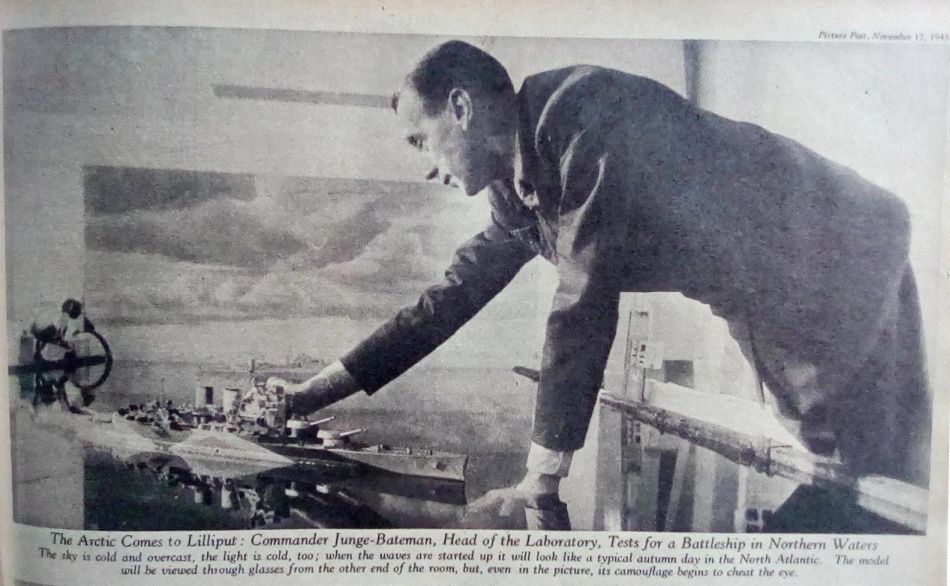
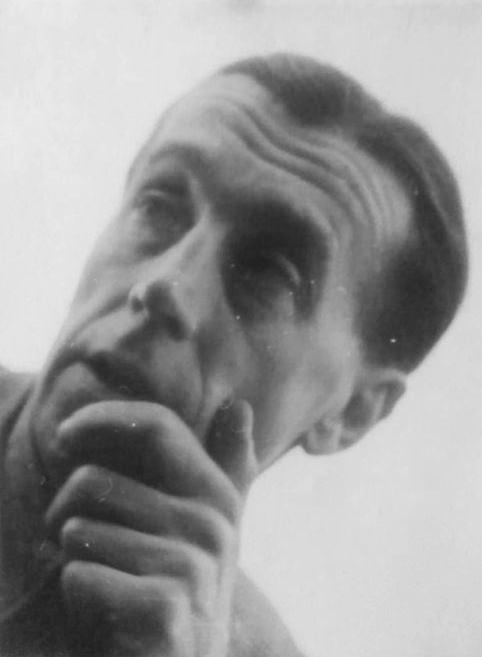
As we saw in the main essay on JYB, during the Second World War he combined art with naval practicalities by becoming the head of a British naval camouflage section at Leamington Spa. An article about the Leamington Spa research station, titled &ldquo:Experiment in Light and Shade”, appeared in The Picture Post on 17 November 1945 (p.19–21) and featured a photograph of JYB in action (Fig.1a). A rather better picture of him – taken, Jacqueline thinks, in the late 1940s or early 1950s – is shown in Fig.1b.
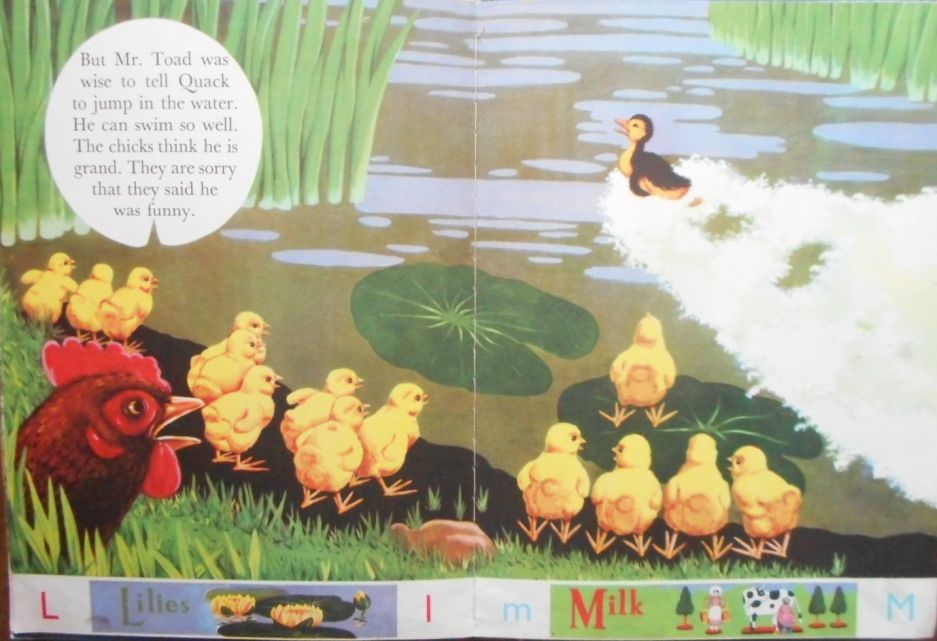
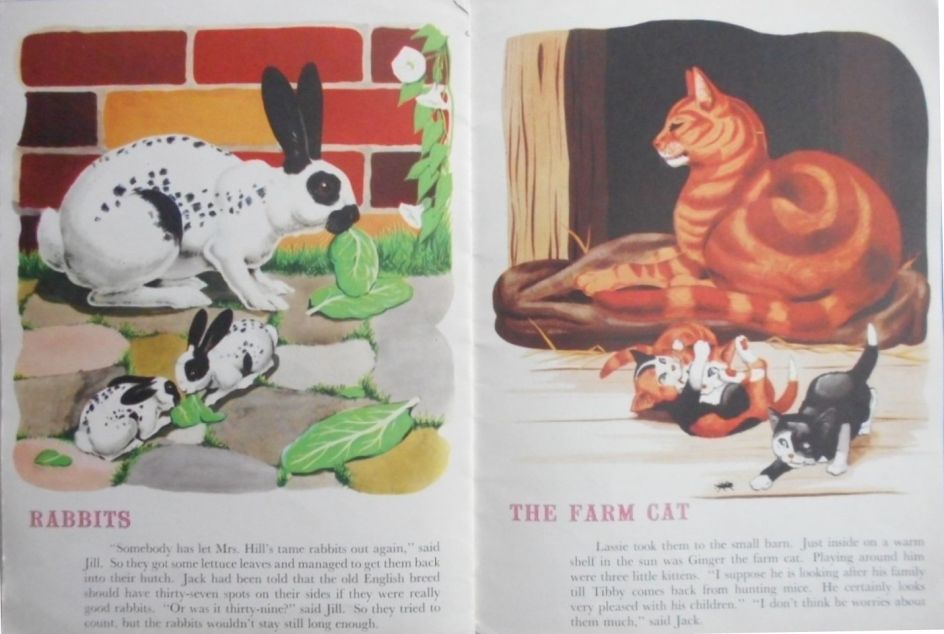
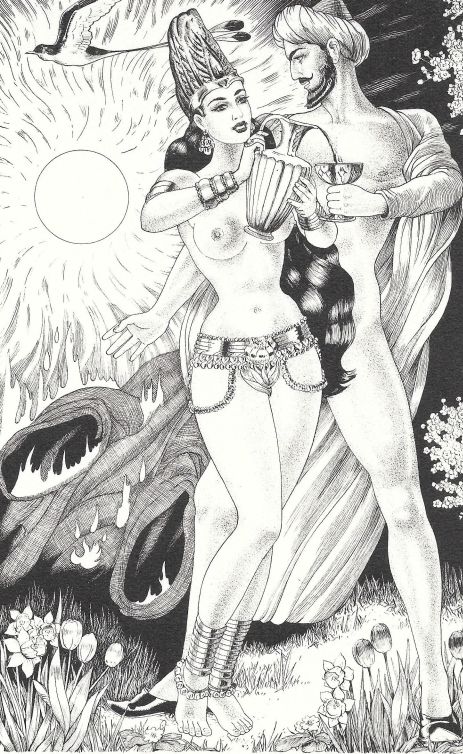
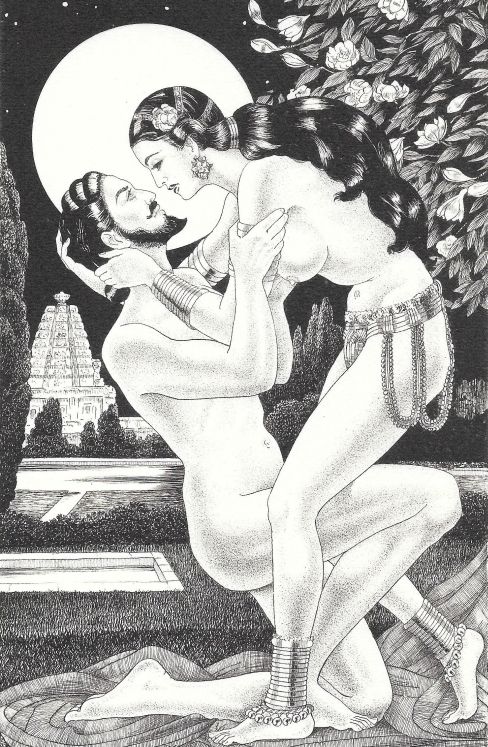
In the main essay we saw the great contrast between JYB’s book illustrations for children and his rather erotic illustrations for The Rubaiyat and Ovid’s Metamorphoses. Since that essay was published, two more books for young children illustrated by JYB have come to light – Mrs Cluck and Master Quack and Jack and Jill’s Farmyard Friends. Both were issued in the “News of the World Betterbook for Children” series in 1951 (they were undated, but were advertised in The Bookseller that year (1)) and both were edited by Annette Mills, sister of the actor John Mills and she of Muffin the Mule fame (2). Fig.2a is from the former and Fig.2b from the latter. In contrast the two extra plates done for the 75 special ‘de luxe’ copies of the Golden Cockerel Press edition of The Rubaiyat (3), which were not available for inclusion in the main essay, are shown here Figs.3a & 3b. (As can be seen, they are pretty much on a par with the seven illustrations in the ordinary edition.)
But a major work not mentioned in the main essay simply because I was unaware of its existence until Jacqueline told me about it, deserves a section to itself.
How to be a Hero was a biting anti–war poem written and illustrated by JYB under the name Yunge. It was published by the Cresset Press of London in 1938 when the threat of War loomed large. The Prologue of the poem opens thus:
Ladies and Gentlemen, with your consent,A special Puppet show I now present. A play which shows in tableaux one by oneThe fate which overtook a Puppet’s son. How from the very day when he was bornHe had no choice, but found himself a Pawn, His mind not free, but moulded from without,Puzzled and wondering what it’s all about.
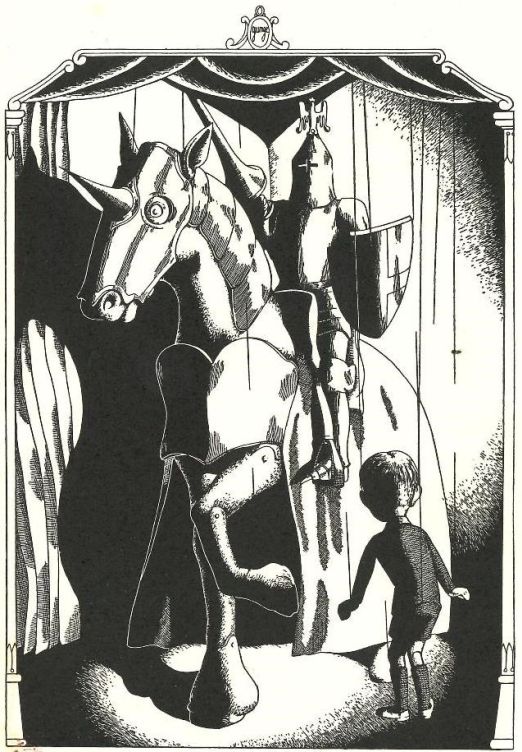
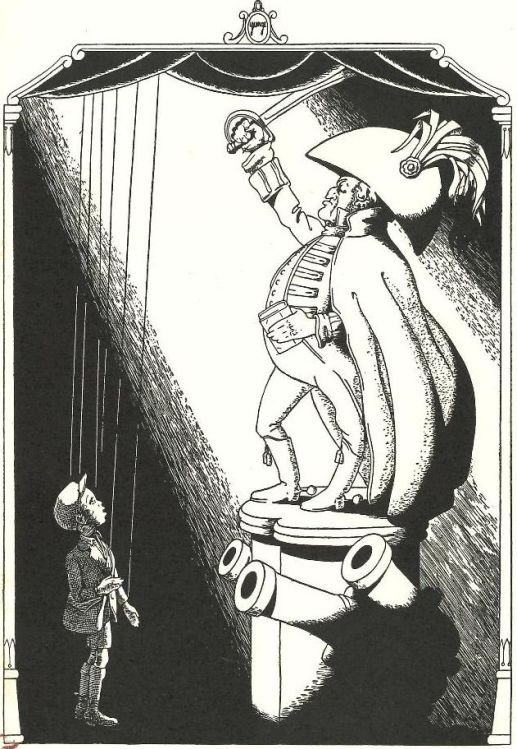
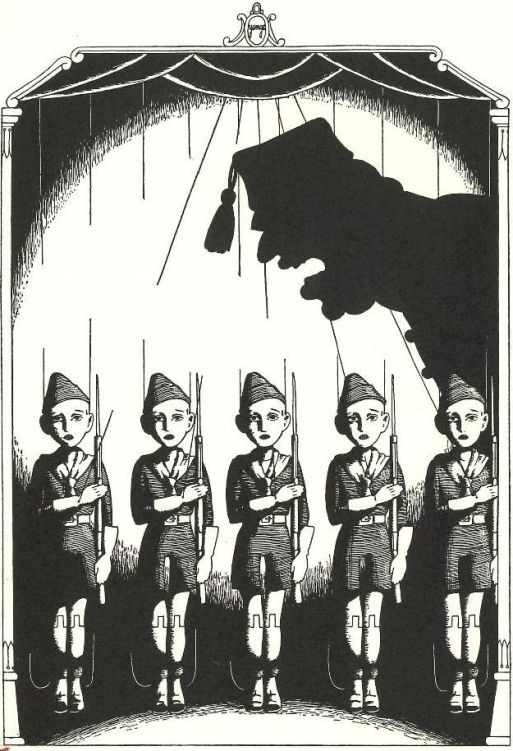
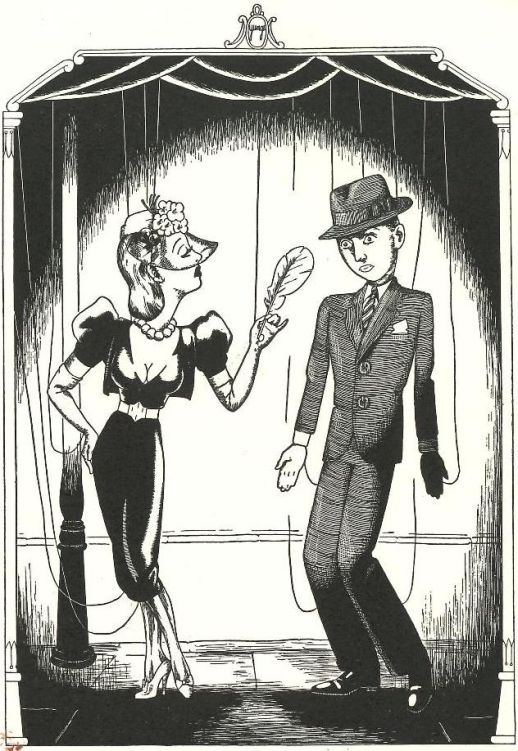
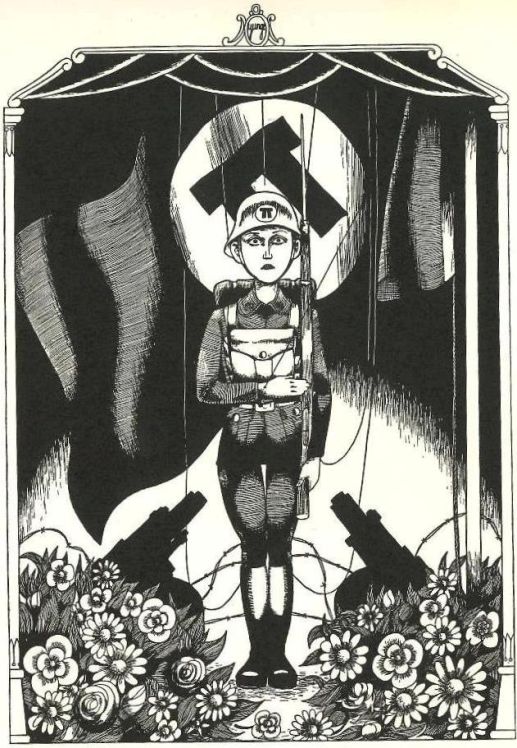
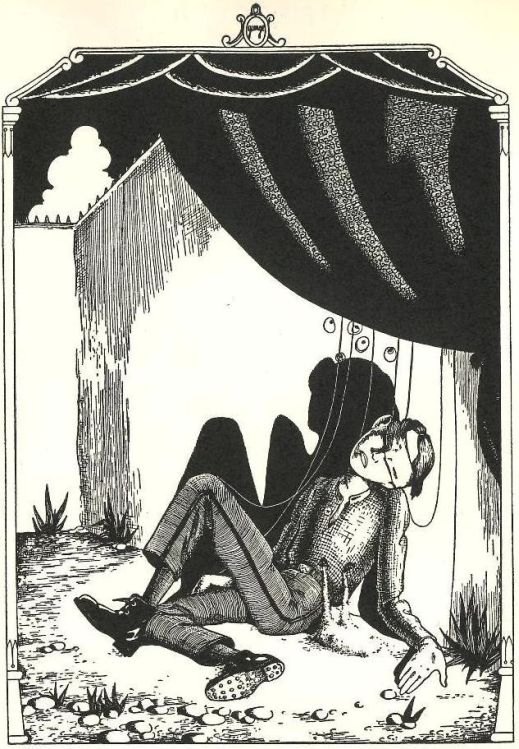
He is taught by children’s tales to reverence warlike knights (Fig.4a – p.15) & mighty military heroes of the past (Fig.4b – p.17) and thus are fashioned the soldiers of the future (Fig.4c – p.23.) As war approaches:
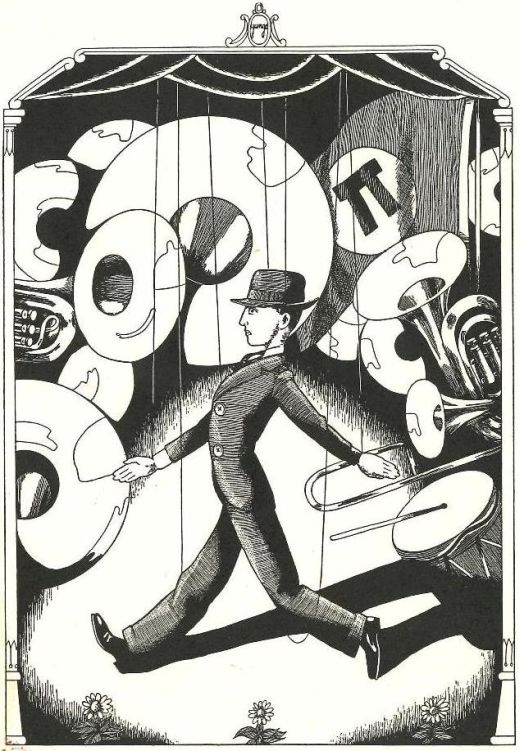
Brave martial music stirs the soul amain.It stirs the soul, but petrifies the brain. (Fig.4d – p.29)
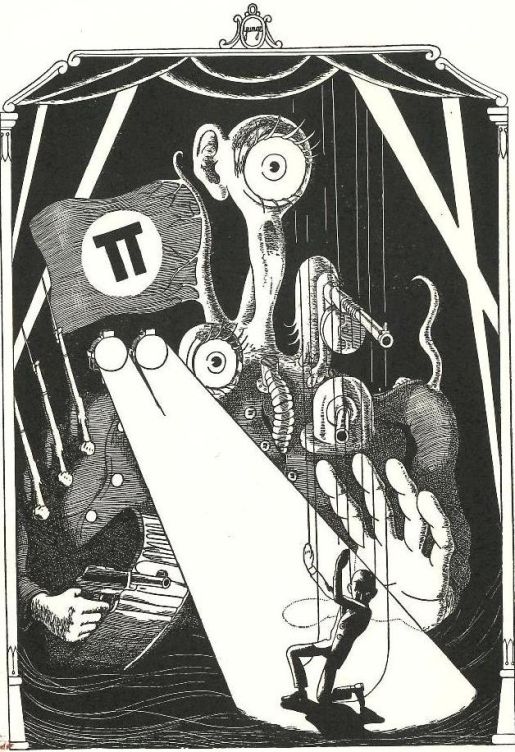
His views are fuelled by war films and fed by propaganda that the enemy is “A bogey of the most appalling kind” (Fig.4e – p.41.) In particular:
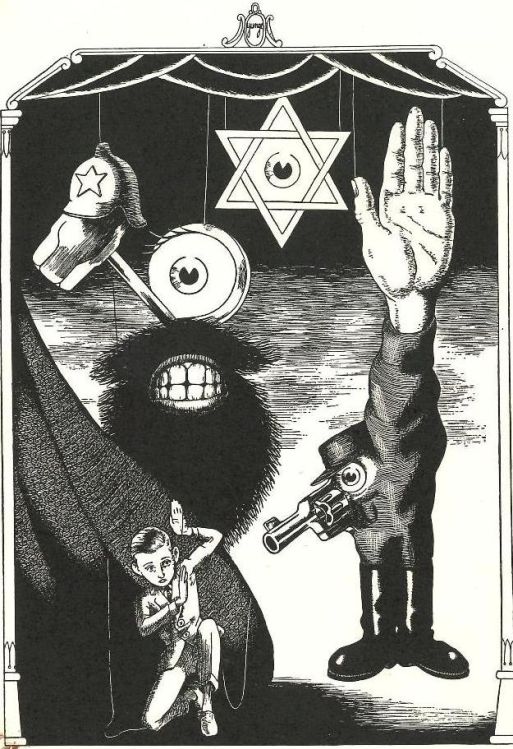
Three Bogies more to frighten people blue,The Communist, the Nazi and the Jew. Terrified people follow where they’re ledAnd question not the sense of what is said. (Fig.4f – p.45)
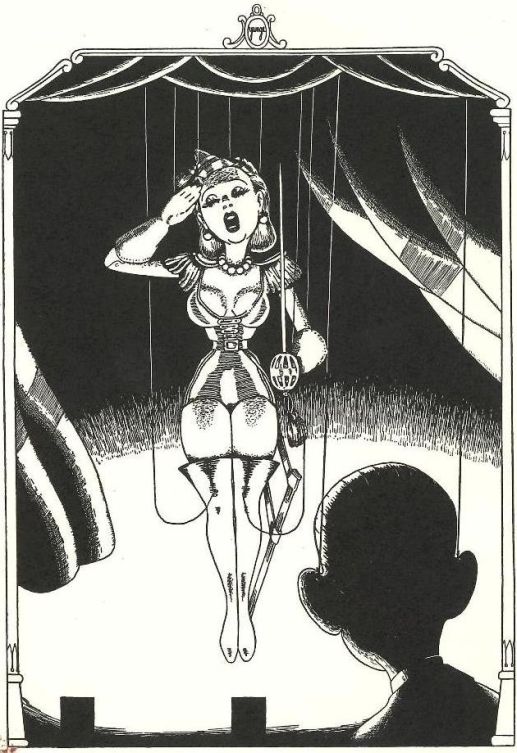
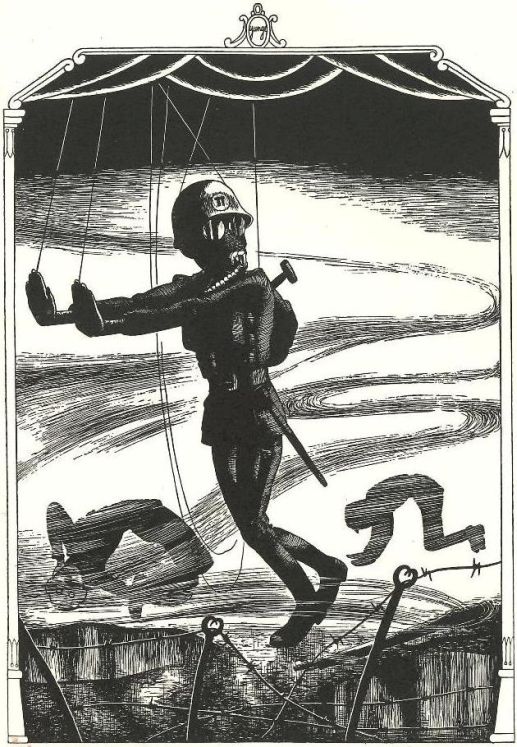
Threatened by the thought of the white feather if he doesn’t join up (Fig.4g – p.51) and urged on by “This lady singing patriotic songs” (Fig.4h – p.53), he finds himself enlisted, “the Hero ready for the fray” (Fig.4i – p.57.) The poem goes on:
Alas that I should tell, the Hero fails,Before the threat of gas his poor heart quails. His nerves cannot compete with this mad strain.He panics, turns, turns back: but runs again. (Fig.4j – p.61.)
The end result is the firing squad:
And so the Hero ends against a wallA life that’s not heroic after all. (Fig.4k – p.69)
The Epilogue of the poem ends thus:
So now farewell to Puppet, let him lie’Til happier times for puppets shall draw nigh; Until the world is made, for common men,A pleasant place; then pull the strings again.
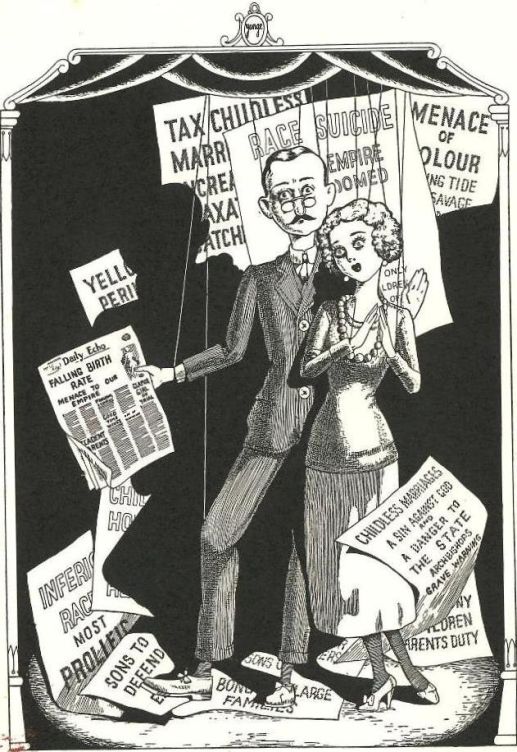
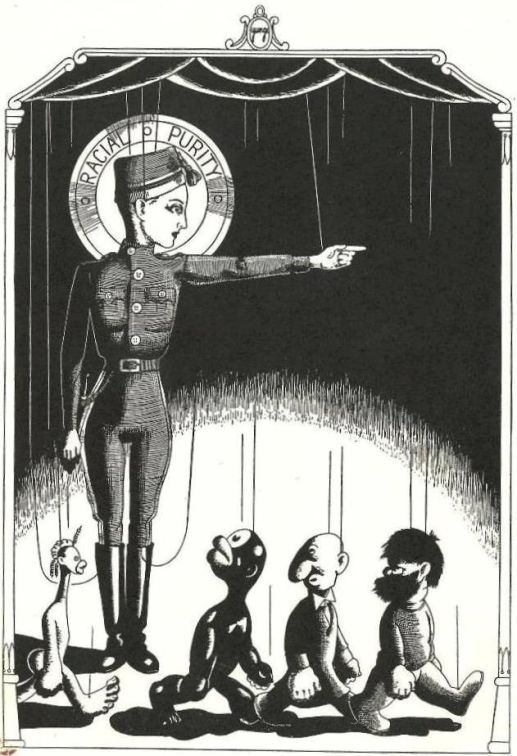
The above gives the main thrust of this extraordinary little book of 70 pages. Interwoven with the main theme are references to other issues of the day – the falling birth rate & the puppetry of children moulded by that of their parents (Fig.4l – p.11) and the assumed inferiority of other races, that “vile plan / To jeopardise the brotherhood of man” (Fig.4m – p.33.) The figures at the foot of the illustration appear to be, going right to left, the Communist (compare the bearded hammer and sickle in Fig.4f), the Jew and the Negro, all facing backwards. The curious figure on the left, facing forward is a bizarre puzzle – does it represent a cynical view of what ethnic manipulation might lead to ? It is a frightening thought that that the uniformed woman pointing to the right could have been prophetically captioned, “This Way to the Gas Chamber.”
The art–work here is some of JYB’s most inventive and ingenious work, I think – I particularly like the surrealist approach of Figs.4e & 4f, the characterisation of Figs.4g & 4h and the neat way in which he has pictured racial superiority in Fig.4m. The notion of Man as the Puppet of Fate is a very old one, of course, being a pictorial representation of Predestination, but that doesn’t detract from JYB’s novel use of it here. It is interesting too, as noted in the main essay, that JYB illustrated an edition of Pierre Louÿs’s erotic novel, The Woman and the Puppet, published in London by Thornton Butterworth Ltd in 1935. It is the story of Dona Concepcion Perez, a fickle Spanish temptress & femme fatale, and her besotted ‘puppet’, Don Mateo Diaz. Recall also that JYB appeared on the title–page of that book as J. Yunge, and that all of its illustrations were signed Yunge. Only later, it seems, did he become J. Yunge–Bateman, with or without the hyphen.
As we saw above, JYB himself was very liberal in his views on race, and given the role that he played in the First World War, it certainly seems odd to find him (he retired Lieutenant–Commander in the navy in 1926, remember) writing such a fierce anti–war polemic. But then many young men must have signed up full of patriotic fervour at the beginning of the First World War, believing that the Hun would be defeated by Christmas 1914, only to find the continuing realities of the war were horrific beyond any expectation. Many, like the young puppet in JYB’s poem, must have been terrified to the extent of desertion, and have faced a firing squad as a result. “I think my father’s interest in Buddhism might have pointed him to a more peaceful way of life,” Jacqueline told me, “but he never talked about it.”
Jacqueline told me that her father did a series of half–page articles headed “Strange but True” for the popular boys’ comic Eagle, possibly in the 1950s, though she had no copies of any, or indeed any further details about them. “It was definitely the Eagle, though,” she told me, “because I was an avid reader, spurning its rather soppy sister paper Girl (as I saw it)!"
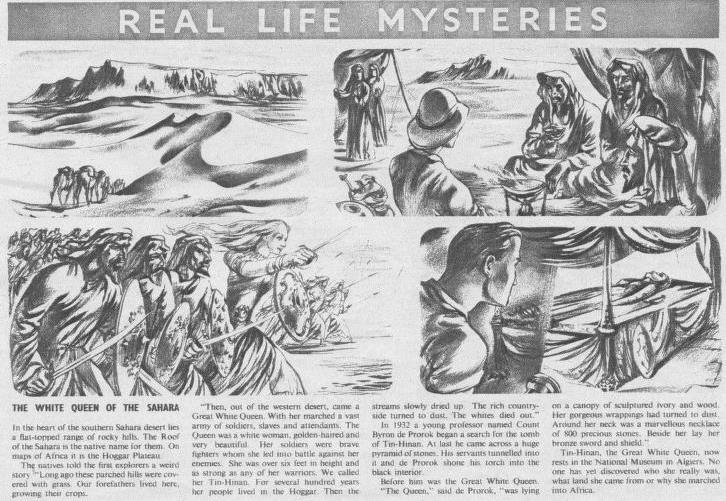
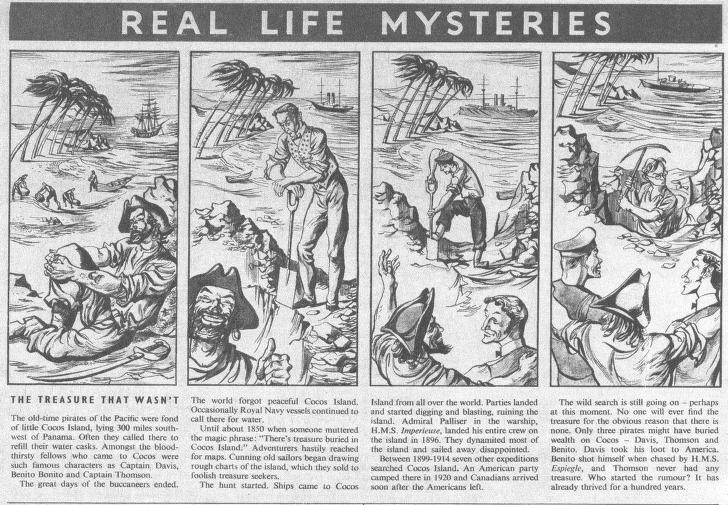
I could find no trace of “Strange but True”, but a series of half–page features titled “Real Life Mysteries” did turn up in Eagle in the early 1950s (the comic started in 1950.). Two examples are shown here.
Fig.5a: “The White Queen of the Sahara”, featured in the issue of 21 April 1950. A presumed queen named Tin Hinan did live in about the fourth century AD; her tomb was first discovered in 1925 and excavated in the early 1930s; and her skeleton revealed her to have been tall. However, though various legends surround her, she was not white, but of Berber extraction.
Fig.5b: “The Treasure that wasn’t”, featured in the issue of 12 May 1950, and tells the legend of a long lost pirate treasure on Cocos Island in the Pacific. When this feature was written, the treasure was still regarded as just a legend, but in 2015 it (or at least, a treasure) was actually discovered, having been exposed by a storm.
Needless to say, “The Mary Celeste” featured in the series (26 May 1950).
Unfortunately, no author of the text is named and the illustrations are unsigned, so it is not certain that these are the features that Jacqueline remembered.
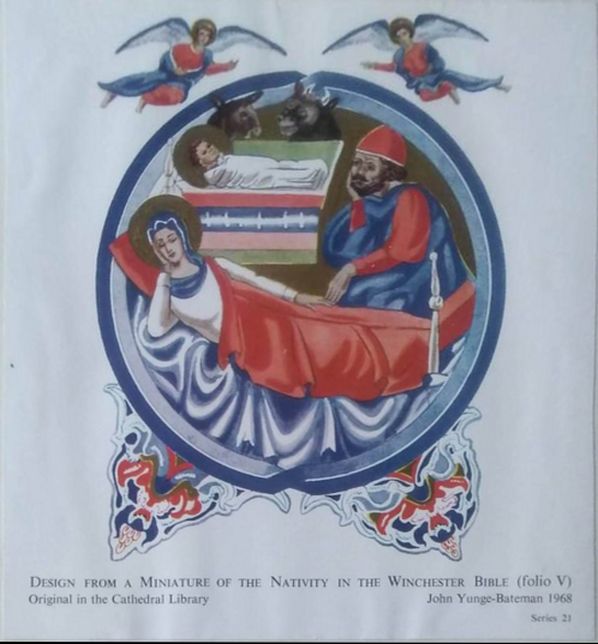
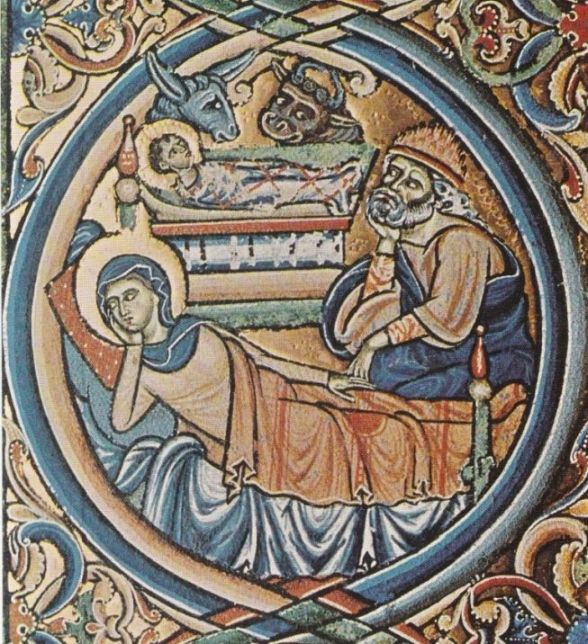
An interesting project which Jacqueline mentioned was her father’s design for a Christmas card based on a nativity scene from the great twelfth century Winchester Bible. The image she supplied is shown in Fig.6a, and the original is shown in Fig.6b for comparison. As can be seen from the caption of Fig.6a, this is not an image of the card itself, but of the design for it, dated 1968, presumably for an exhibition somewhere.
This addendum was started in 2020 when Jacqueline first contacted me by email. Quite a bit of it was researched and put into draft form during the period of the lockdowns on account of covid 19, but various family pressures at Jacqueline’s end eventually led to a suspension of her collaboration in 2023. After working on other things, I sought to resume our joint project in late 2025 but, sadly, learned that Jacqueline had died in January 2025. Consequently it is not now possible to ask her about any of the uncertainties noted in the above – the location of the Giselle painting and the Eagle Comic features, for example – nor about other things she vaguely recalled in her emails and intended to pursue, notably information about an exhibition of her father’s work at Foyles at some unknown date (4). Likewise, regarding the Christmas card he designed based on Fig.6a, and where that design had been exhibited, plus the significance of the “Series 21” to the bottom right of the caption. Sadly, too, she never got around to telling me if she had copies of, or knew of, her father’s illustrated editions of The Rubaiyat and Ovid’s Metamorphoses done for the Golden Cockerel Press. It would have been useful, too, to have learned more about her father’s interests and the number of changes of address the family made as she was growing up. But at least How to be a Hero has seen the light of day again, and we do now have a portrait of JYB (a copy of which is now lodged with the National Portrait Gallery), albeit a quirky one.
Note 1: See, for example, The Bookseller for 10 March 1951 (p.393), 7 April 1951 (p.907) & 15 September 1951 (p.703.) The first of these seems to indicate a publication date for Jack and Jill’s Farmyard Friends in March 1950, but this seems to refer mistakenly to Jack & Jill – All Colour Gift Book – see issue of 4 March 1950 (p.339.)
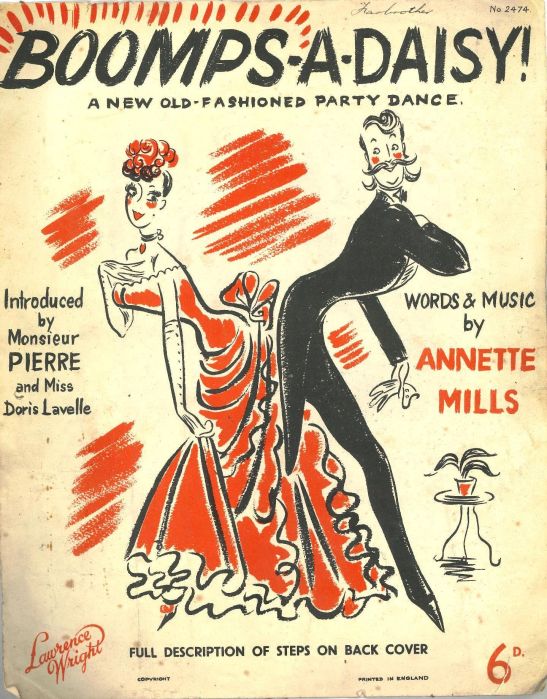
Note 2: She also wrote the words and music for “Boomps–A–Daisy !” (Fig.7), published by Laurence Wright Music Co. Ltd. in 1939. The cover illustration is delightful, but unfortunately unsigned.
Note 3: The colophon of the Golden Cockerel Press edition noted that: “The edition is limited to 200 numbered copies, of which Nos: 1–75 are specially bound and issued with an extra set of the seven plates together with two more not printed in the book.”
Note 4: Probably the 1956 exhibition noted in the main body of my article on the artist. See Roderick Cave & Sarah Manson, A History of the Golden Cockerel Press 1920 – 1960 (2002), p.223, though they give no details of what was included in the exhibition.
My thanks are obviously due to Jacqueline Norman for her help in compiling the above, but also to Lorraine Coughlan for supplying the image used in Fig.1a, and to Fred Diba for supplying the images reproduced as Figs.3a & 3b.
**********
To go to a) the original essay on John Yunge-Bateman, click here; b) the Notes & Queries Index, click here; c) the Index of the Rubaiyat Archive, click here.